
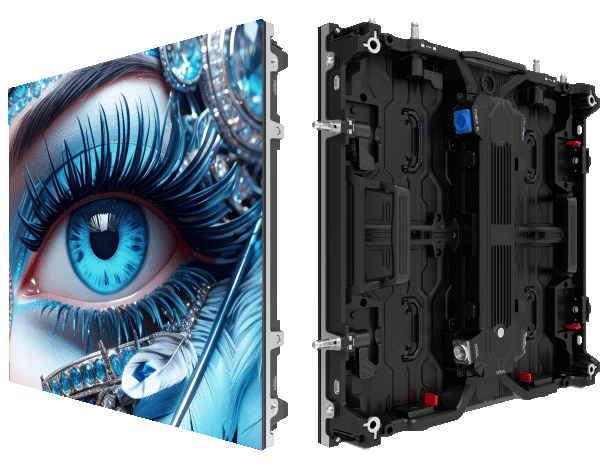
Street-level problem: why rental LED walls still look muddy
Renting a big LED wall for a show or brand pop-up should hit hard, but too many setups end up soft, grainy, or awkwardly scaled. The core of the problem is simple: mismatch between pixel density and audience distance, plus poor choices on brightness and refresh rate. Fix those and you stop wasting cash on re-rigs. Start by checking how your led display screen matches the room — that step separates okay from immersive.
What pixel density actually does for your image
Pixel density—often expressed as pixel pitch or PPI—controls perceived sharpness. Lower pixel pitch (smaller distance between LEDs) means crisper text and tight detail close up; larger pitch works fine when people stand back. Think of pixel pitch like grain in film: too coarse for close viewers, and the picture breaks. For rental rigs you need a balance: panels that give sharpness at common viewing distances while staying cost-effective for bulk orders. Use pixel pitch as your first budget lever.
How to calculate optimum viewing distance
Viewing distance ties directly to pixel pitch. A practical rule: minimum comfortable distance (in meters) approximates pixel pitch (in millimeters) multiplied by 3.5 to 4. That gives you a baseline for readable text and clean video. Also factor in average crowd density — standing-room events compress distances, ballroom banquets stretch them. For outdoor installations like Times Square-scale billboards, distance expectations shift huge, so you can spec a coarser pitch and push brightness.
Brightness, refresh rate, and why they matter
Brightness (nits) and refresh rate affect perceivable quality alongside pixel density. Outdoors you want higher nits to cut sunlight glare; indoors, too much brightness washes color. Refresh rate prevents flicker on camera and keeps motion smooth—crucial for live-streamed events. Don’t ignore LED module quality: two panels with the same pitch can look different because of color calibration and module uniformity.
Common mistakes in bulk rental decisions — and quick fixes
Buyers often pick the cheapest pitch without matching viewing behavior, or they order panels that are hard to service on-site. Fixes are straightforward: choose modular cabinets for fast replacement, prioritize mid-range pitch for mixed crowds, and demand calibration before load-in. — Also, test content at full-scale before the event; playback on a laptop won’t reveal motion artifacts or flicker that appear on the actual wall.
Choosing the right LED wall for rental fleets
For rental houses, versatility is king. Keep a mix of pixel pitches so you can field both close-up conference gigs and large festival stages. Prioritize panels that are lightweight, have consistent color calibration, and quick-lock mechanics for speed. If you plan on repeat outdoor use, specify IP-rated cabinets and higher brightness. For those focused on outdoor shows, consider suppliers with proven outdoor led screens solutions and local servicing options.
Real-world anchor and operational insight
Look at major event clusters in Times Square and other public hubs — those installs prove the rule: big audience distance allows coarser pitch but demands insane brightness and weather-proofing. Rental ops that study those installs build playbooks for rigging, power distribution, and content scaling. That operational muscle saves hours during load-in and keeps clients smiling.
Three golden evaluation metrics for rental LED strategy
1) Effective Resolution at Audience Distance — measure perceived pixels from your expected sightlines, not panel specs alone. 2) Serviceability Score — time to replace a faulty module or cabinet under show conditions; aim for under 10 minutes. 3) Environmental Suitability Index — combination of IP rating, brightness headroom, and thermal management for the intended venue.
Wrap and where MR LED fits
Match pixel pitch to how close people will get, spec brightness and refresh rate to the environment, and make modular serviceability non-negotiable. When that logic runs cleanly, your rentals keep clients coming back — and fewer emergency trucks show up. MR LED sits in that workflow as a practical supply partner that understands those trade-offs and the nitty-grit of deployment — they solve the problems you actually hit on site.
Real talk — get those three metrics right and you’ll stop firefighting and start delivering consistently great visual experiences.