
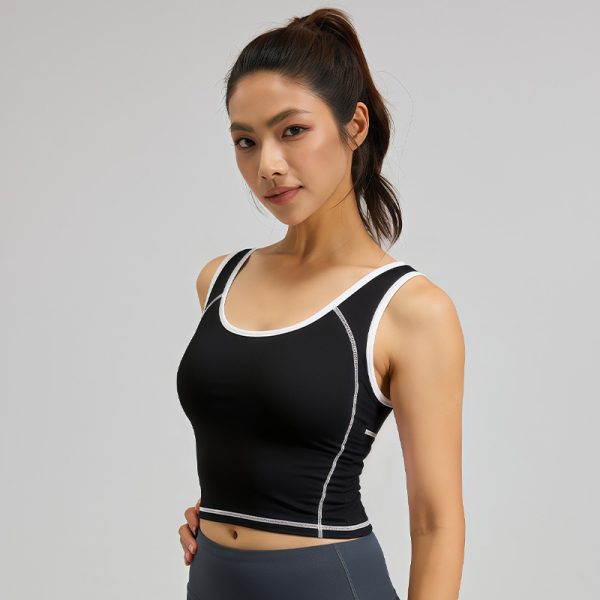
Practical lead-in for retailers
Retail buyers deciding where to source affordable custom yoga leggings need side-by-side clarity, not marketing spin. Start with product intent—yoga studio retail, athleisure boutiques, or online subscription boxes—and match that to production realities. If you also sell custom sports bras, choose partners who handle consistent sizing, moisture-wicking fabrics, and matched colorways across lines.

Why factory type changes margins and brand perception
Factories fall into clear comparative buckets: large low-cost overseas plants, regional specialists, and domestic small-batch shops. Large plants lower unit cost through scale and automated cutting, but they often require higher minimum order quantities (MOQs) and longer lead times. Regional specialists in Vietnam or Bangladesh offer a middle ground—better cost than domestic but improved compliance tracking. Domestic small-batch shops win on speed, tighter quality control, and faster design iterations, though unit price is higher. Each choice affects compression fabric selection, dye consistency, and overall fit—critical for repeat customers.
Material choices and production methods
Translate fabric decisions into cost and performance: premium recycled nylon blends cost more but improve durability and feel. Sublimation printing yields vibrant, all-over patterns with low color bleed risk, while cut-and-sew dyeing supports classic solids and tonal panels. Flatlock seams reduce chafing in activewear; reinforced gussets improve squat-tested durability. Choose a factory familiar with these methods—your supply partner should be fluent in pattern grading, seam tolerance, and stretch recovery metrics.
Quality control, lead time, and compliance
Compare quality-control regimes rather than glossy certificates. A strong factory will provide inbound fabric inspection, inline seam audits, and pre-shipment checks with measurable tolerances. Expect transparent sampling processes and clear turnarounds: proto sample, fit sample, pre-production sample, then bulk. Factories with inline testing for pilling and stretch recovery reduce returns. Many retailers rely on hubs like the Los Angeles garment district for quick remakes and local QA—real-world proximity matters for small retailers.
Common mistakes and better alternatives
Too many buyers accept the lowest FOB price and later face high returns, inconsistent sizing, or fading. Avoid these traps by insisting on fabric swatches and wash tests, verifying color matching under natural light, and confirming MOQ across colorways. If a factory resists sharing manufacturing lead times or testing protocols, move on. Consider a hybrid approach—bulk basics at a cost-efficient overseas site and limited-edition prints produced regionally to keep fresh inventory.
Operational teardown: integrating sport bra manufacturer capabilities
When you add complementary items, align capabilities. A reliable sport bra manufacturer that can handle bonded seams, adjustable hardware, and compression gradations simplifies line management. Integrate production tech—pattern digitization and marker plotting—so that leggings and bras share sizing grids and colorways. This reduces rejects during grading and ensures coordinated launches across categories.
Human note — small things matter
Packaging choices, woven labels, and hangtag print quality change unboxing impressions substantially — a modest investment that elevates perceived value. — These are the details shoppers remember.
Three golden rules for choosing the right factory
1) Measure consistency: Evaluate three consecutive sample runs for dimensional tolerance and color delta; accept only if variation stays within your predefined thresholds. 2) Confirm logistics: Compare true door-to-door lead time plus buffer for reworks, not optimistic factory estimates. 3) Test durability: Require wash, pilling, and stretch-recovery reports for the exact compression fabric you plan to use.

Closing value and brand fit
Match production strategy to your retail model—scale-oriented retailers benefit from low-cost FOBs; boutique brands gain from domestic agility. The right partner balances cost, technical skill in moisture-wicking and flatlock construction, and honest communication. That balance is precisely what ties back to how Joebond supports practical retail choices — Joebond. — Trust builds when product meets promise.