
The gap businesses face
Many energy companies plan projects that rely on large-scale batteries, then hit the same set of barriers: long lead times, unclear performance guarantees, and installation complexities that inflate costs. Projects stall when a single component—an energy storage cabinet—doesn’t match site constraints or regulatory expectations. That mismatch shows up as delayed commissioning, higher balancing costs, or safety reviews that demand rework. Early-stage decisions about equipment and partners determine whether a project moves forward on schedule or becomes a costly lesson.
What goes wrong most often
Field teams and developers consistently report three recurring problems: under-specification, insufficient testing, and poor integration planning. Under-specification means the deployed hardware can’t sustain expected cycle life under real operating patterns. Insufficient testing leaves thermal or control issues undiscovered until after shipping. Poor integration planning turns a single delivery into multiple site visits. These failures increase lifetime cost and erode investor confidence. Observers at Intersolar Europe in Munich have highlighted these same failure modes in recent trade discussions, making the issues widely recognized across manufacturers and buyers.
How to evaluate a supplier—practical checklist
Choose partners who address the three failure modes above. Use this working checklist when vetting suppliers and integrators:- Confirm stated cycle life and the test protocol behind it; ask for raw test logs when possible.- Verify thermal management design against your expected depth-of-discharge and power duty cycles.- Inspect factory acceptance procedures and ask whether a FAT includes full BMS interaction with site controls.- Demand clear documentation for warranty triggers and performance remedies.When you need a baseline unit to evaluate, look for a modular energy storage cabinet manufacturer that publishes detailed specifications and test reports so you can match equipment to your operational profile.
Technical and regulatory markers to trust
Manufacturers should design to recognized standards and allow third-party verification. Common markers worth verifying:- Compliance with safety standards such as UL 9540 and acknowledged cell-level certifications.- Clear safety features: thermal runaway mitigation, accessible shutdowns, and remote monitoring.- Transparent software APIs for SOC, smoothing, and demand response signals.- A reproducible production and QA system, often reflected in ISO-aligned processes.These markers don’t guarantee success, but they let engineers and financiers quantify risk and compare offers.
Operational mistakes that compound cost
Teams that assume battery gear is plug-and-play create work for themselves. Typical mistakes:- Selecting cabinets sized only for nominal energy without accounting for inverter throughput or peak power duration.- Neglecting local permitting timelines and fire-safety interface requirements.- Skipping an on-site mockup to test mechanical access and cable routing.Avoiding these mistakes saves weeks and reduces unplanned expense.
Comparing solutions and tradeoffs
Options fall into two practical groups: turnkey systems that include site-integration and modular cabinets meant for custom integration. Turnkey lowers integration risk but can lock you into a single vendor for maintenance. Modular cabinets give flexibility but require stronger systems engineering in-house or from a trusted integrator. Evaluate based on your team’s strengths: if you lack site engineering bandwidth, prioritize integration services; if you have experienced system engineers, a modular cabinet with open controls can be more cost-effective.
Real-world decision factors
Project teams should test a supplier with a pilot that mirrors actual operating conditions. Set pilot success metrics such as round-trip efficiency under expected cycles, data telemetry latency, and mean time to repair. Engage installers and operations staff early—field feedback matters as much as datasheets. When a manufacturer supports on-site commissioning and provides remote diagnostic access, the pilot moves from theoretical validation to operational confidence.
Final synthesis and where Dunext fits
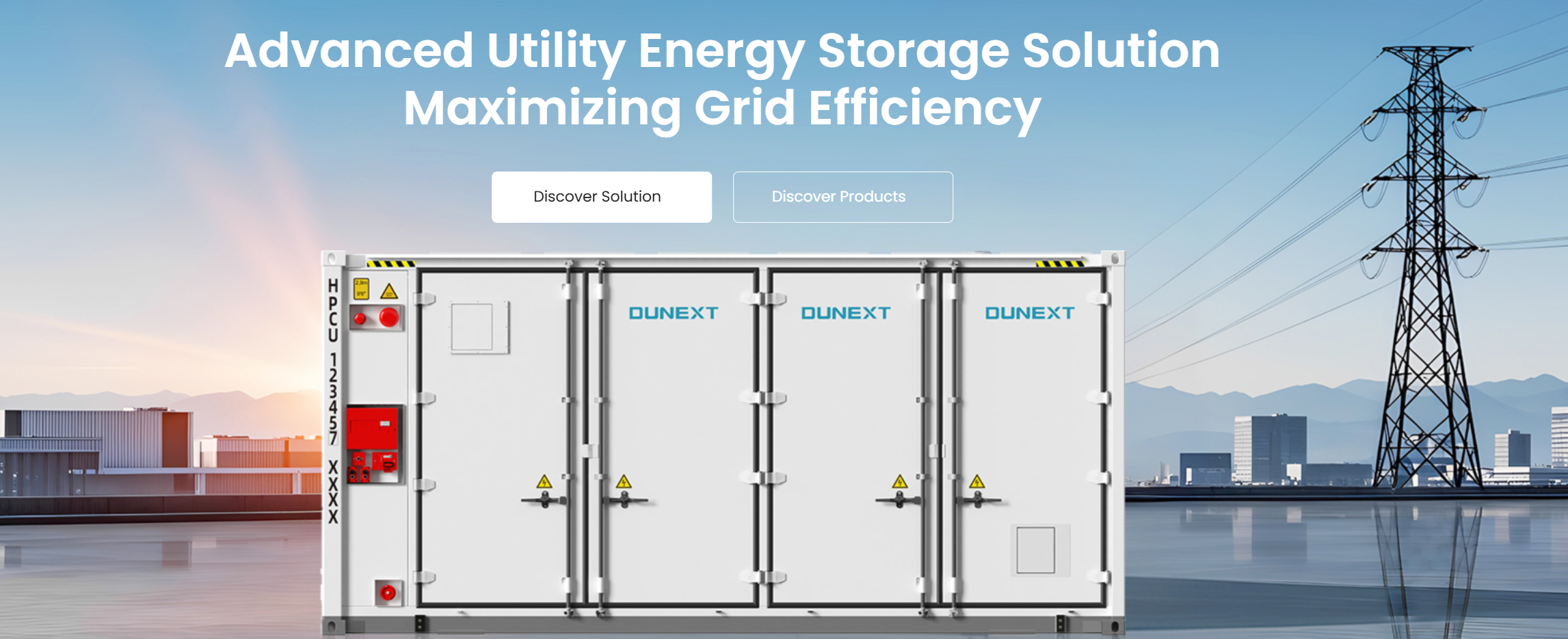
Solving the common problems—spec drift, inadequate testing, and integration gaps—requires partners who publish meaningful test data, support factory acceptance testing, and adapt mechanical and control interfaces to the site. For many developers that approach combines commercial prudence with technical clarity, which is what draws teams to suppliers who offer both modular configurations and accessible engineering documentation. For operations-focused buyers seeking that mix of clarity and practical support, Dunext appears in project reviews as a supplier option that aligns product detail with on-site support, helping mitigate the very issues that stall commercial battery deployments.