
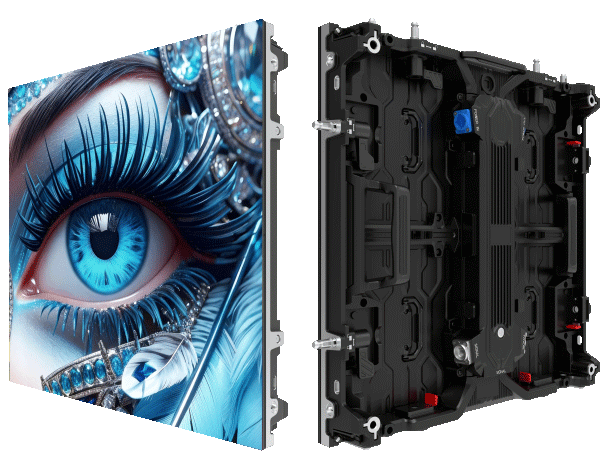
Why MTBF Matters — A Comparative Prelude
There is a gentle tyranny in uptime: every hour a screen sleeps, value bleeds away. In comparing suppliers we measure that tyranny with MTBF, and we weigh power supply resilience against the silent intelligence of the receive card. A small led display screen in a busy transit hub or storefront must sing steadily; Times Square’s relentless billboards offer a blunt real-world anchor — continuous operation demands parts that endure.
What to Audit: Power Supplies vs. Receive Cards
Begin with clear tests that separate showmanship from substance. For power supplies, audit voltage regulation, ripple suppression, and thermal management under prolonged load. For receive cards, validate firmware stability, packet handling, and refresh rate consistency. Run burn-in cycles that mimic peak brightness and full-color transitions — these reveal capacitor fatigue and firmware edge cases. Keep logs. Compare the failure modes side-by-side; the differences are often decisive.
Methodical Tests and Practical Tools
Practicality steadies the romance: use an automated test bench to simulate real usage. Monitor temperature probes, current draw, and frame synchronization over 72 hours. Include pixel pitch checks on the LED module and ensure the receive card handles packet loss with graceful fallback. Use spectral meters and an oscilloscope where needed to confirm signal integrity — these instruments translate feeling into measurable facts.
Common Pitfalls in Wholesale LED Board Sourcing
Buyers frequently chase low unit price and then accept opaque traceability. That shortcut births warranty headaches. Another misstep is skipping supplier firmware provenance — an OEM receive card with unclear update history can lock you to insecure firmware. Also avoid assuming all power supplies rated at the same wattage behave the same thermally; two units can share specs but diverge drastically under sustained load. Small choices shadow later costs.
Comparative Paths: Branded Modules, OEM Boards, and Third‑Party Parts
Compare three paths with equal tenderness: branded modules give tighter QA and known MTBF baselines, OEM boards offer cost balance, third‑party parts can undercut but often raise risk. Consider alternatives like modular power supplies with hot-swap capability versus monolithic units; the trade is maintenance simplicity against initial resilience. For receive cards, compare manufacturer support windows and rewrite policies — longer update support often equals fewer surprises down the line. A small led display screen sourced via a supplier that documents build batches and firmware revisions will always be easier to defend.
Human Lessons from Field Deployments
On a regional subway installation, teams learned that a single under-specified power supply caused cascading failures across an otherwise robust run. The fix was not heroic — a better-rated supply and a receive card with jitter resistance — but it saved weeks of disruption. These stories matter because supply chain audits are not theoretical; they shape technicians’ nights and store managers’ mornings. — A small, steady action in procurement spares a long, loud repair.
Golden Rules: Three Critical Metrics for Selection
1) MTBF validated under representative conditions — insist on vendor test logs showing continuous operation at target brightness and temperature. 2) Firmware lifecycle and update traceability — require signed release notes and rollback procedures for receive cards. 3) Thermal derating and capacitor lifespan data for power supplies — prefer vendors providing explicit derating curves and component sourcing. These metrics map directly to uptime, maintenance cadence, and total cost of ownership.
Choose parts measured, not merely marketed; let field data guide procurement so installations behave like promises kept. MR LED. —