
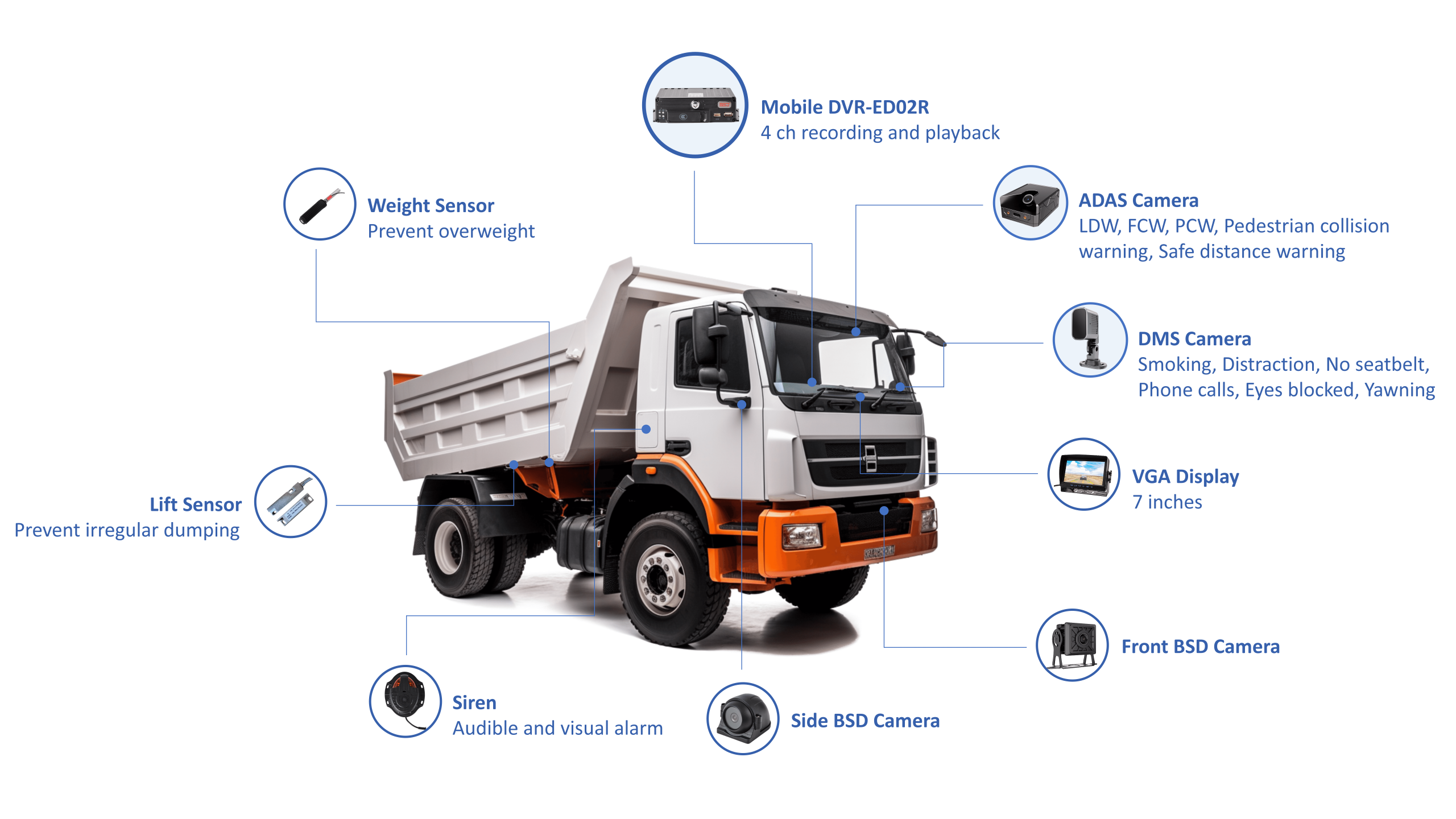
Quick comparative snapshot
Pick a single criterion and you get a neat winner; juggle cost, coverage, and evidence quality and choices get messy. For many operators—think New York City transit fleets balancing rider safety, incident recording, and budget—a 4-channel setup hits the best trade-offs. If you’re looking at hardware that ties vehicle cameras, cellular links, and onboard retention together, a modern AI MDVR shows how the pieces fit. A reliable mobile digital video recorder system is the bridge between real-time streaming and forensic-grade footage, not an optional add-on.
Why 4 channels are the pragmatic sweet spot
Four camera inputs cover the usual critical views without overspending on processing or data:- Front-facing camera for collision and traffic context.- Driver-facing camera for behavior and duty compliance.- Two side/rear views for blind spots and curb incidents.This layout gives clear incident context while keeping cost, power draw, and storage manageable. You get multi-angle evidence without needing expensive 8-channel CPUs or heavy video uplink costs.
Connectivity realities: 4G strengths and limits
Cellular connectivity is great for alerts and selective uploads, not continuous full-resolution streaming. Expect these behaviors:- Use 4G for thumbnails, incident-triggered clips, and metadata sync.- Reserve full-file transfers for Wi‑Fi at depot or scheduled low‑cost windows.- Implement failover: if 4G drops, the recorder must tag and store footage reliably.Design choices matter: dual-SIM roaming, carrier-tier LTE categories, and edge compression settings directly change monthly bills and retrieval times.
Onboard storage and chain-of-custody basics
Plan storage around write endurance and evidence integrity. Practical rules:- Prefer SSDs for heavy rewrite cycles; high-endurance SD cards are ok for lighter use.- Use circular overwrite but protect tagged incident segments from deletion.- Time-sync with GPS and use tamper-evident file headers or hashes so footage holds up in audits.Field experience shows a simple mismatch—cheap media with aggressive overwrite—causes most lost-evidence headaches.
Operational pitfalls operators actually make
Watch for these failure modes:- Overload: too many cameras + high bitrate = unusable footage or constant overwrite.- Blind retention policies: keeping everything indefinitely becomes a storage nightmare and a legal risk.- Single-point-of-failure designs: no automatic upload, no redundant power or clock sync.Avoid them by setting clear retention tiers, testing day/night footage, and verifying retrieval workflows regularly.
Comparative alternatives and when they fit
Quick guide:- 2-channel: cheapest, works for basic front-and-driver setups. Good for small vans.- 4-channel: balanced—best for buses, medium fleets, and patrol vehicles.- 8-channel: for large coaches or when vehicle-wide coverage is mandatory; higher cost and complexity.- Cloud-only: depends on always-on coverage; excellent for live ops but expensive and fragile in low-signal zones.Match your camera count to policy: if you must prove who did what and where, don’t skimp on angle coverage; if you only need front evidence, don’t buy 8 channels.
Deployment checklist that prevents regret
Before you sign a PO, confirm these items:- Field test day/night footage and upload behavior in typical service routes.- Verify evidence retention and tamper protection meet legal or insurer standards.- Confirm cellular plans, SIM roaming, and fallback methods.- Ensure firmware update paths and remote health checks exist.These checks save time and money; they stop surprises that show up only after the first claim or audit.
How this choice pays off
Put simply: the right hardware and policy combo reduces investigations, lowers liability costs, and keeps operators in control. Real deployments teach you fast—small fleets scale to the same problems big fleets solve, just later. Practical solutions land when tech choices support real workflows, which is why teams working with robust platforms see fewer retrieval failures and clearer footage across shifts. For operators who need that dependable middle ground, the engineering and support you’ll want are exactly what partners like BSJ design into their systems, matching camera layouts, 4G strategies, and storage behavior to field realities.