
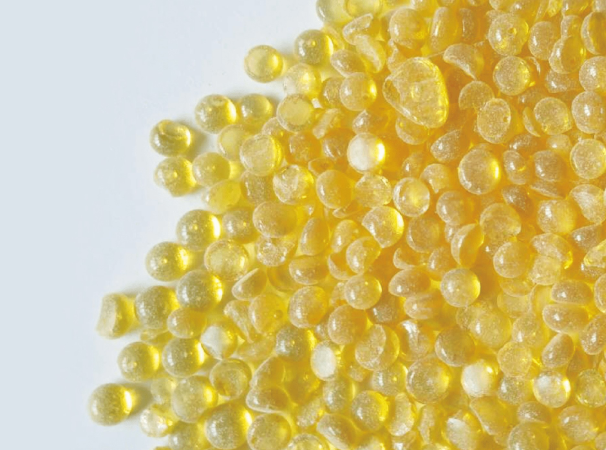
Data-first snapshot: what’s failing and where
Laboratory comparisons of thermoplastic road marking resins often isolate the same failure mode: a measurable drop in luminance factor (β) after accelerated ultraviolet exposure. Early degradation traces back to molecular chain scission and surface oxidation rather than pigment loss. In practical formulation work—whether tuning a rosin-based binder or mixing a high-softening-point resin—materials scientists cross-check rosin flux behavior in analogous thermal systems; see examples like soldering flux rosin that demonstrate how resin chemistry shifts tackiness and softening point under heat. The data-driven approach begins with controlled 48-hour xenon exposures and ends with precise, numeric delta-β thresholds.
How polymer architecture maps to luminance stability
Descriptive breakdowns show two dominant architectures: semi-crystalline thermoplastics with higher softening point and amorphous, tackier resins with lower glass transition. Semi-crystalline networks resist micro-oxidation and maintain surface reflectance; amorphous chains tend to embrittle and yellow. Key testing parameters—irradiance set at 0.35 W/m2 at 340 nm, black-panel temperature maintained at 63°C, and continuous light exposure for 48 hours under ISO 4892-2 test conditions—reveal which backbone chemistries hold β within acceptable limits. Industry terms to note here include rosin flux, softening point, and viscosity, each tied to how the binder withstands thermal and photochemical stress.
Comparative materials evidence from controlled runs
In head-to-head trials, hydrogenated backbone modifications consistently reduce chromophore formation. Hydrogenation lowers double-bond content, cutting routes for photo-oxidation and limiting yellowing. This is why formulators sometimes add hydrogenated rosin as a stabilizer or blending component—its reduced acid number and altered softening point improve compatibility with pigments and glass beads. Measured outputs typically include: Δβ after 48 hours, change in gloss units, and embrittlement index. Each gives a clear numeric story rather than a vague impression.
Practical teardown: where failures begin on the production line
Failure modes often appear during compounding and high-temperature application. Excessive shear or elevated melt temperatures accelerate hydrolysis and cause saponification in acid-rich rosin blends—manifesting as increased tackiness and lower bead retention. Common corrective steps are straightforward: lower melt profiles, use hydrogenation to reduce reactive sites, and monitor acid number at batch release. A short checklist helps quality teams stay consistent:
– Confirm acid number within spec before pigment addition. – Verify softening point and viscosity against the target formulation window. – Run a 48-hour Xenon arc pre-check on pilot batches with documented irradiance and black-panel temperature settings.
Real-world anchor and operational implications
Regulatory and lab communities rely on ISO 4892-2 style xenon arc exposure protocols to mirror outdoor photodegradation; specifying irradiance at 0.35 W/m2, black-panel temperature at 63°C, and a continuous 48-hour exposure produces repeatable, comparable failures. Field data from highway marking longevity studies align with these accelerated runs: markings that fail lab β thresholds typically show accelerated luminance loss within a single season on heavily trafficked corridors. The practical upshot is simple—stabilize the polymer backbone and control batch chemistry to avoid reject rates tied to Δβ limits.
Formulation alternatives and common mistakes
Alternatives include using higher-molecular-weight thermoplastics, modified rosins, or crosslinkable additives. Common mistakes are treating hydrogenation as a panacea—over-hydrogenating can raise softening point too much and hinder application—or ignoring process controls like peak melt temperature. Balance matters; maintain bead retention and adhesion while reducing chromophore formation. Remember to log {main_keyword} and {variation_keyword} in your production teardown so corrective actions tie to traceable metrics.
Advisory close: three golden rules for reliable β retention
1) Control reactive sites: prioritize hydrogenated rosin blends or equivalent reduction in double bonds to limit photo-oxidation pathways. 2) Lock process windows: set and enforce melt temperature, shear, and viscosity targets; audit acid number and softening point at release. 3) Benchmark to repeatable xenon parameters: use 48-hour runs at 0.35 W/m2 (340 nm) with a 63°C black-panel temperature to validate batch stability against Δβ criteria.
Final note—practical, measurable chemistry beats hopeful tweaks every time. KOMO. —